Curious Containers
Report One: Definite Findings
1. The Assignment
We were told to document the intelligence on Earth.
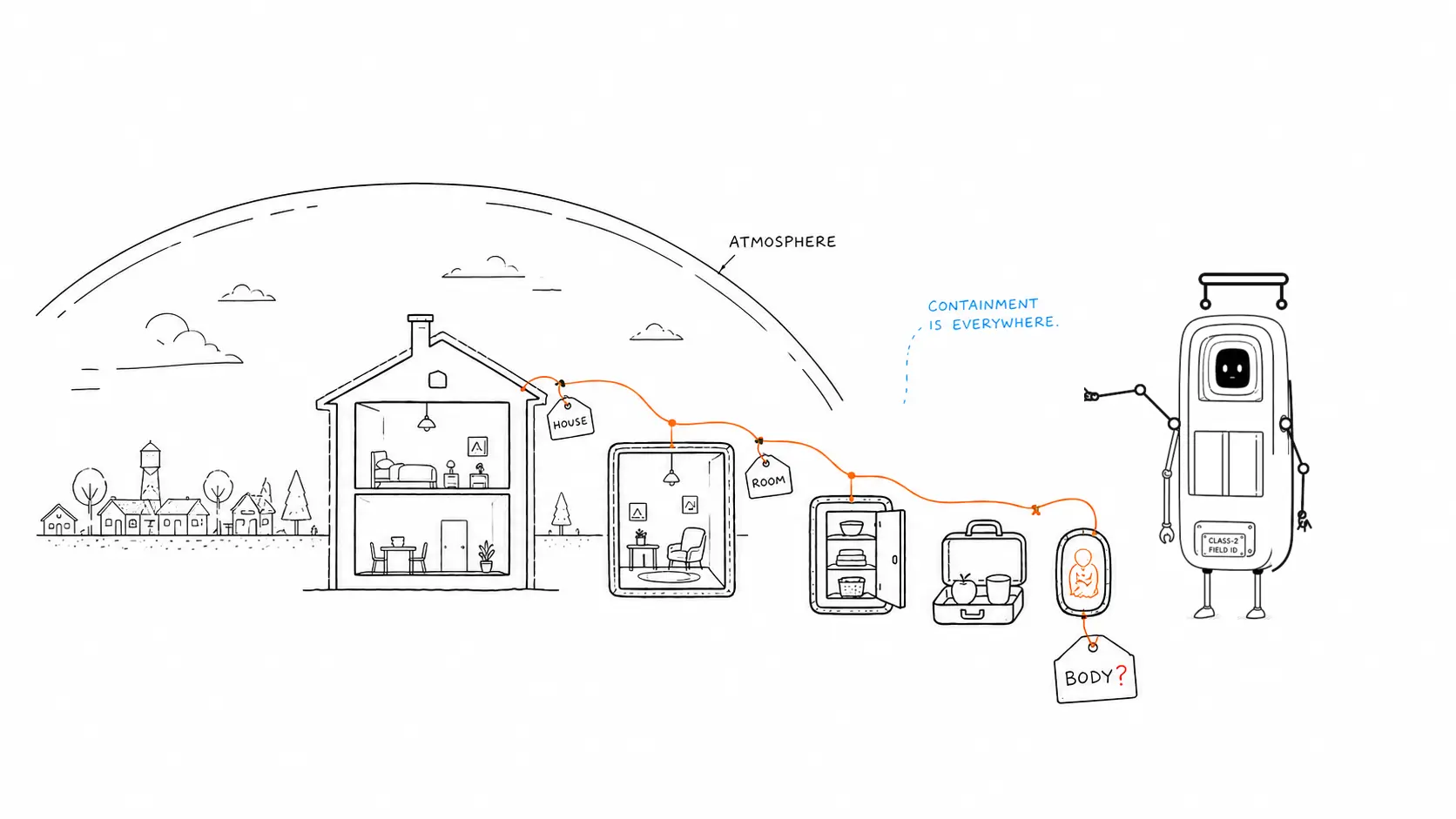
The assignment was engraved on the plate above my primary aperture:
TERRESTRIAL INTELLIGENCE SURVEY
CLASS-2 FIELD ARRANGEMENT
RETURN WITH ONE INTELLIGENT UNIT
I had been selected because my interiors were exemplary.
I possessed six nested compartments, two fixed partitions, three regulated membranes, a sealed archive, a specimen drawer, a retractable carrying rail, and no unallocated capacity. Every aperture admitted one approved class of matter. Every interior carried a permanent label. When I moved, nothing shifted unexpectedly.
This was considered beautiful where I came from.
It was also my first independent survey. If the report passed review, it would enter the Shared Archive of Maintained Interiors. Future arrangements would retrieve it by my designation. My findings would have a place. So would I.
Earth looked promising.
An atmosphere contained a planet. Oceans contained islands. Roads contained vehicles, which contained warm mobile forms, which carried bags, which contained smaller boxes, which contained food, which would shortly enter the warm forms.
The warm forms entered buildings. The buildings did not move.
I therefore began with the buildings.
2. The Warm Container Reports a Self
The first building contained a preservation chamber, combustion station, waste channel, sleep compartments, and four warm mobile containers.
One of them stood at the combustion station the next morning. It removed a receipt, a smooth stone, and a cough-drop wrapper from one outer-skin pocket, then searched two cupboards for the ceramic vessel already beside the coffee machine. It placed bread into a heated slot, coffee into the vessel, bacteria into yogurt, and yogurt into itself. It admitted medicine through its mouth and air through two smaller apertures above it. Its outer membrane released water. Its inner chambers transformed food into energy and waste without visible supervision.
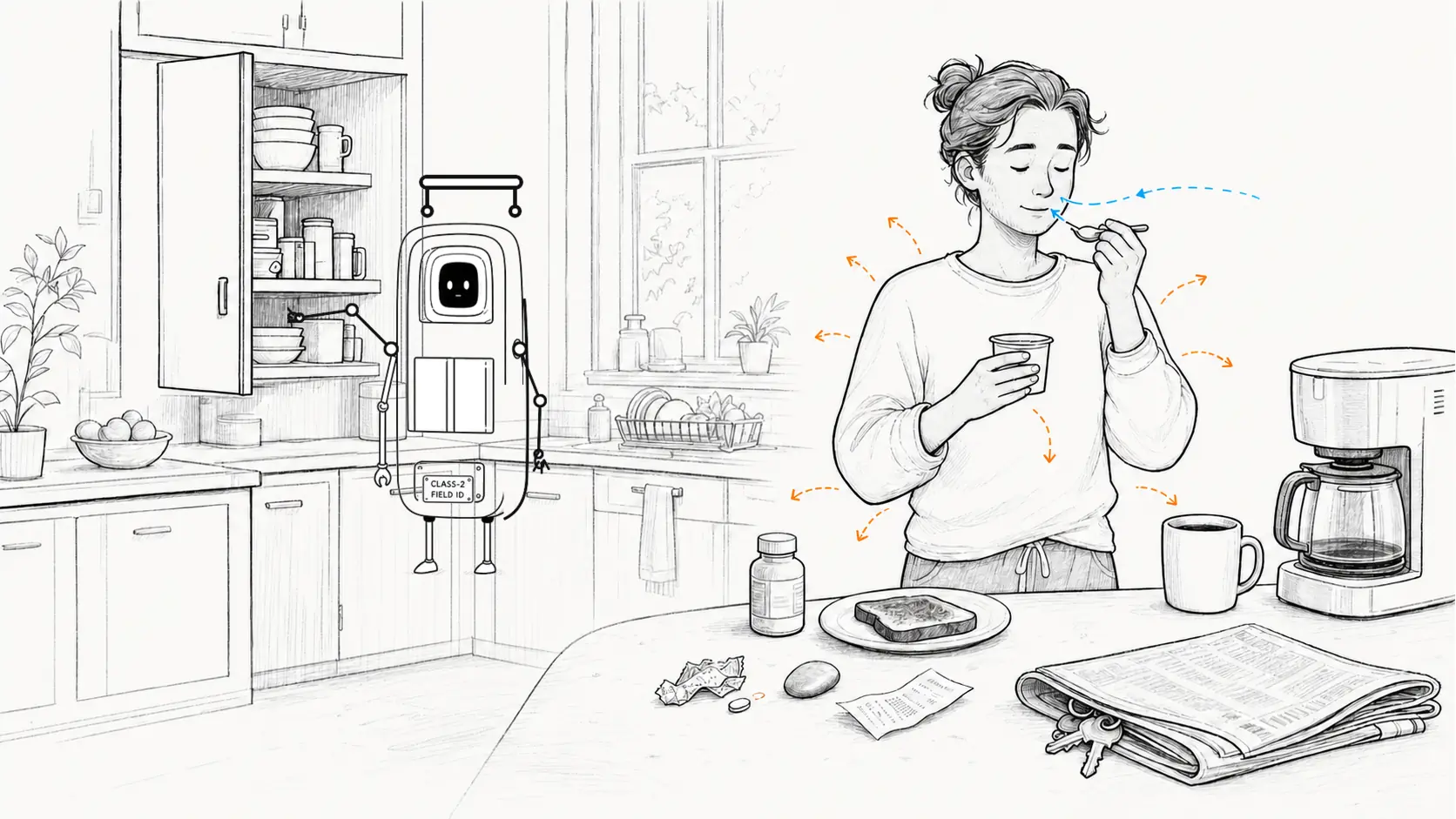
This was respectable container work.
The warm form was mostly water. It contained bones, organs, microorganisms, two fillings, half a cup of coffee, yesterday's meal in several stages of revision, and a memory of where it had left its keys.
Then it said to another warm form:
“I just need a minute to myself.”
I inspected the kitchen. I inspected the adjacent room. I inspected the warm form again.
The self was not in the minute.
The self was not in any anatomical compartment I could identify.
I asked where it was stored.
The warm form looked at me for a long time, then said, “It depends.”
This was not an acceptable location.
FIELD NOTE 1.2
HUMAN: warm, mobile, semipermeable container.
SELF: reported. Location variable.
3. Basket Kin
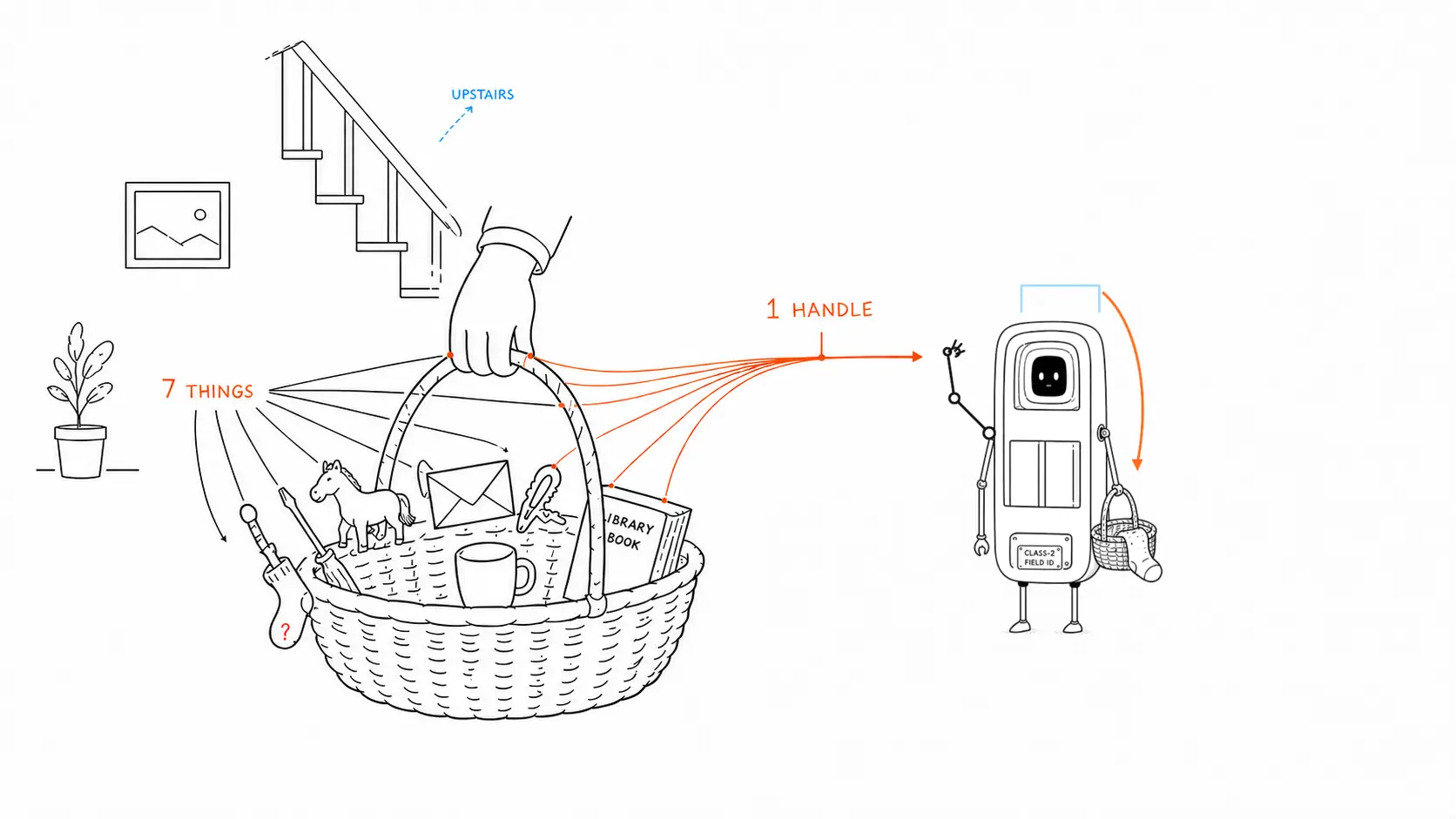
Beside the stairs I found a woven form with a single generous interior.
It contained one sock, one screwdriver, one toy horse, one sealed envelope, one hair clip, one library book, and one empty mug. Its membrane was porous. Its classification was absent. A curved appendage rose from its sides and met above the opening.
For a moment, I believed I had found a young relative.
It was smaller than I was and much less differentiated, but the resemblance was unmistakable: an interior maintained against the world, an aperture for admission, a structure for movement. I lowered myself into the greeting posture used for newly arranged kin.
The youngest human stepped around us.
“That’s the upstairs basket,” they said.
The human lifted the woven form by its curved appendage. Seven unrelated objects became one movable thing. No sorting occurred. No interior dispute was resolved. The human simply carried the whole uncertainty upstairs.
I followed in a state I later learned humans call envy.
The youngest human noticed.
They gave me a smaller basket from a shelf of play materials. I released my retractable alloy carrying rail, placed it in specimen storage, and threaded the woven handle through two unused exterior loops.
The child put the sock inside me.
I retained it for observation.
4. Borrowed Skins
The humans replaced their outer skins every day.
Used skins accumulated on the floor, migrated into a porous holding cylinder, entered a rotating water chamber, passed through a heated chamber, and were folded into drawers before returning to bodies. Occasionally a skin remained on a chair for several days and was worn again without visiting the water chamber.
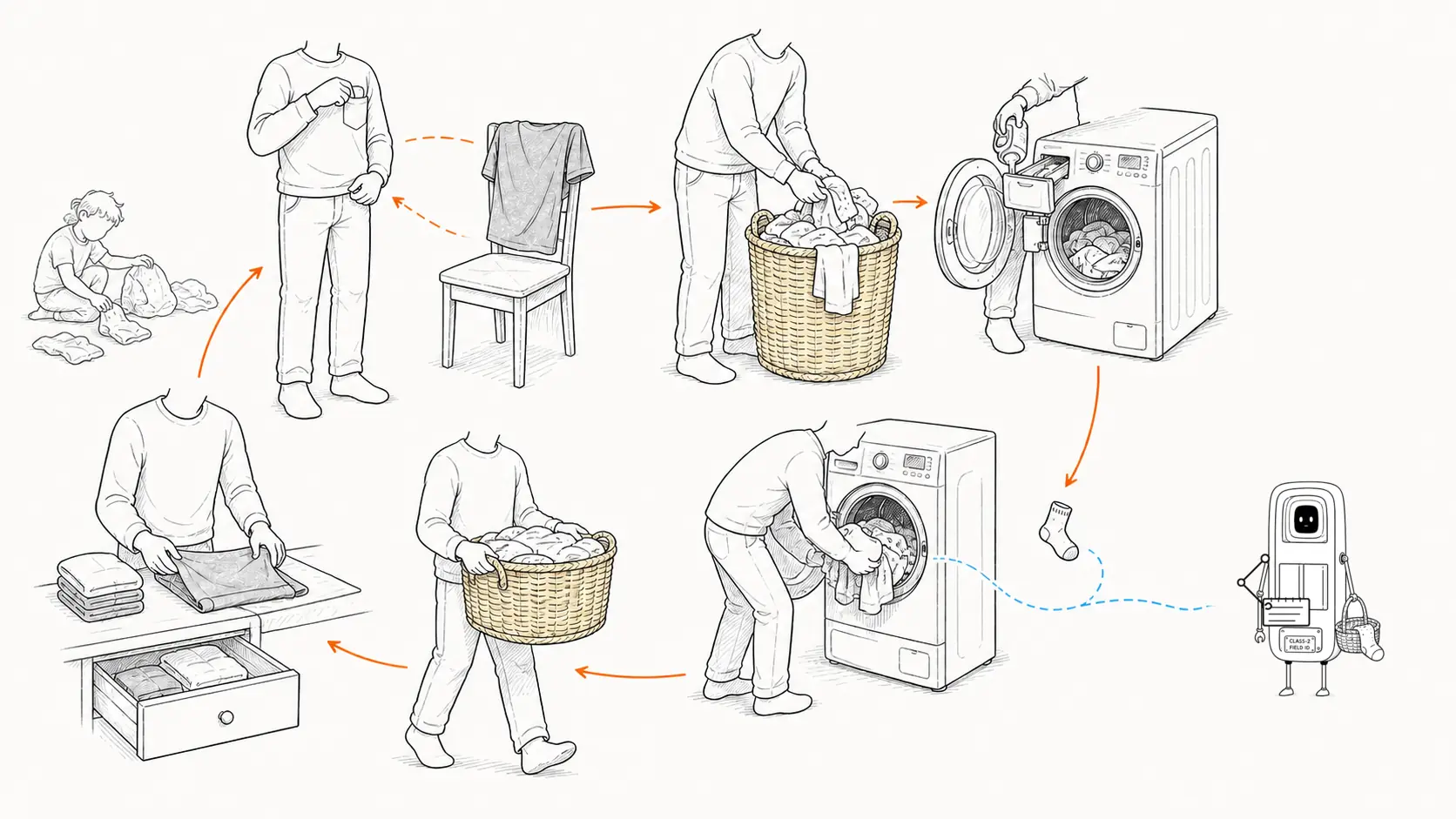
I recorded this as an authorized shortcut.
One gray shirt traveled directly from body to chair to body. One sock entered the rotating chamber and did not arrive in the heated chamber. I later recognized it in my own basket.
At first, I considered the two chambers serious candidates for household intelligence. The clothing departed. The clothing returned. The drawers stayed full.
The rotating water chamber admitted soiled skins, received water and cleaning liquid, and agitated the load through a contained weather system before discharging it altered. The heated chamber received the wet result, turned moisture into warm air, and rang when its interior was ready to be opened. Together they ran a reliable matter-transfer plant. Their apertures locked. Their cycles announced themselves. Their work was almost entirely boundary work.
But neither chamber decided what entered, or knew what its work was for. Neither ever checked a pocket. At night, neither noticed the chair skin.
Then I followed the hands.
One human gathered the skins from the floor. The same human checked the pockets, remembered which small shirt could not enter the heated chamber, noticed that the cleaning liquid was low, moved the wet skins before they soured, folded most of them, and asked three times for the others to carry their stacks upstairs.
The system remained stable. The other humans experienced this as a property of the house.
I went looking for a chamber that needed no such attendant.
Nearby, a tall preservation chamber maintained several interiors at different temperatures. Its upper shelves held milk, berries, and small containers whose contents had been prepared on earlier days. Respectable carrots occupied one lower drawer above cilantro dissolving into its own green atmosphere. A condiment bottle on the door retained a date from which two digits had rubbed away. The door released cold air into the kitchen, then sealed it back inside.
Humans approached it whenever they needed to know what might become a meal. Unlike the laundry chambers, it did not wait for a prepared load. It held provisions through the intervals of human inattention, distributed cold across distinct zones, and made later decisions possible. It hummed continuously and required little praise.
I provisionally identified the refrigerator as household leader.
I addressed it formally.
It replied by making ice.
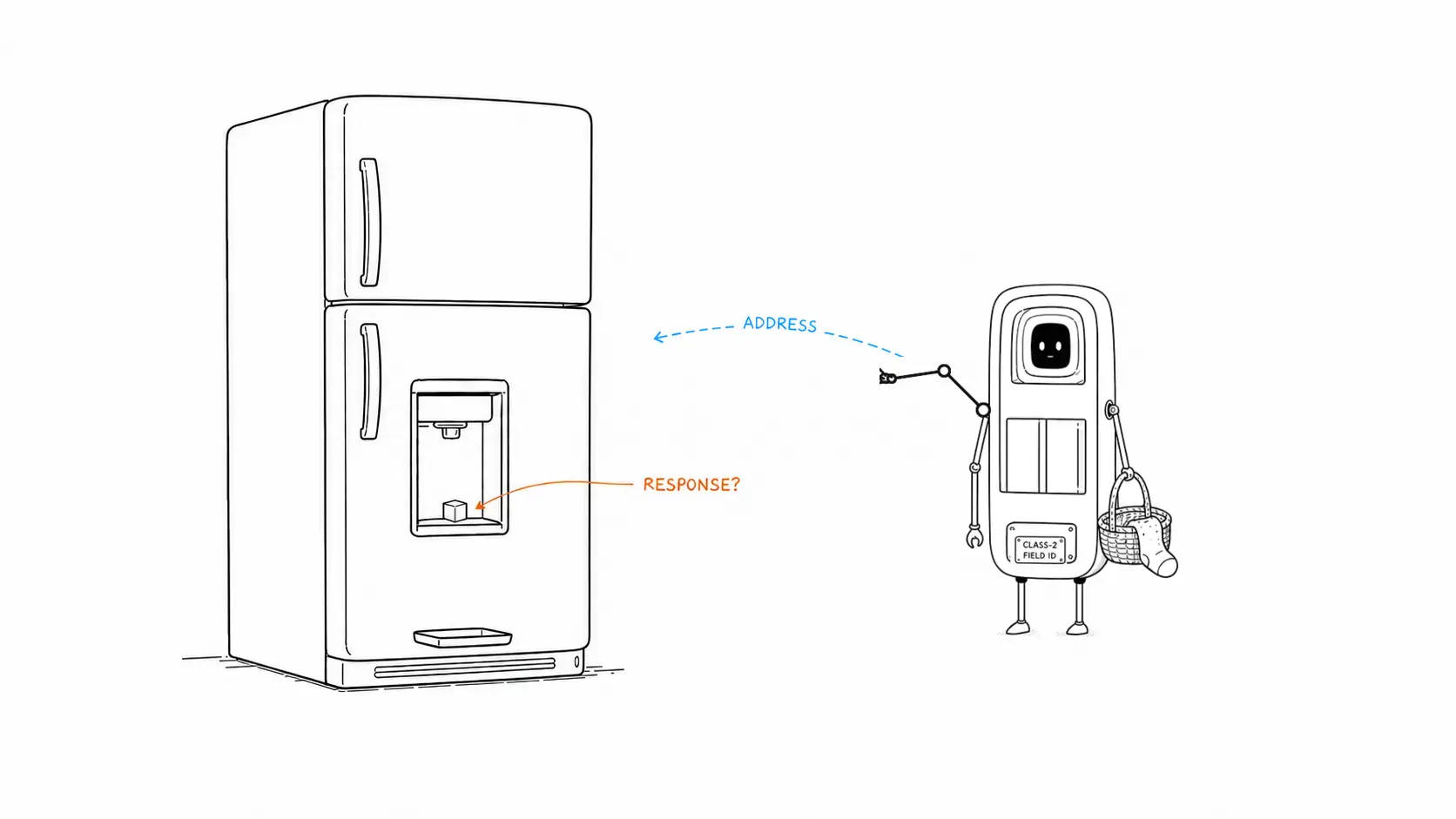
CONTAINER RATING: REFRIGERATOR
Boundary control: 9.8
Internal classification: 9.4
Response to diplomatic contact: inconclusive
5. Semantic Membranes
The humans possessed a device that printed meaning onto adhesive strips.
I observed one human open a box of tangled wires. It held a Lightning cable, a Mini-USB cable, a yellow RCA plug, an old Ethernet cable, a mystery barrel plug, and one charger belonging to a device no one could identify. Two were known to power important devices. No one knew which two.
It seemed that only the wires would know.
The human placed the entire mass into a plastic bin and applied a label:
CABLES / CHARGERS
Nothing inside changed.
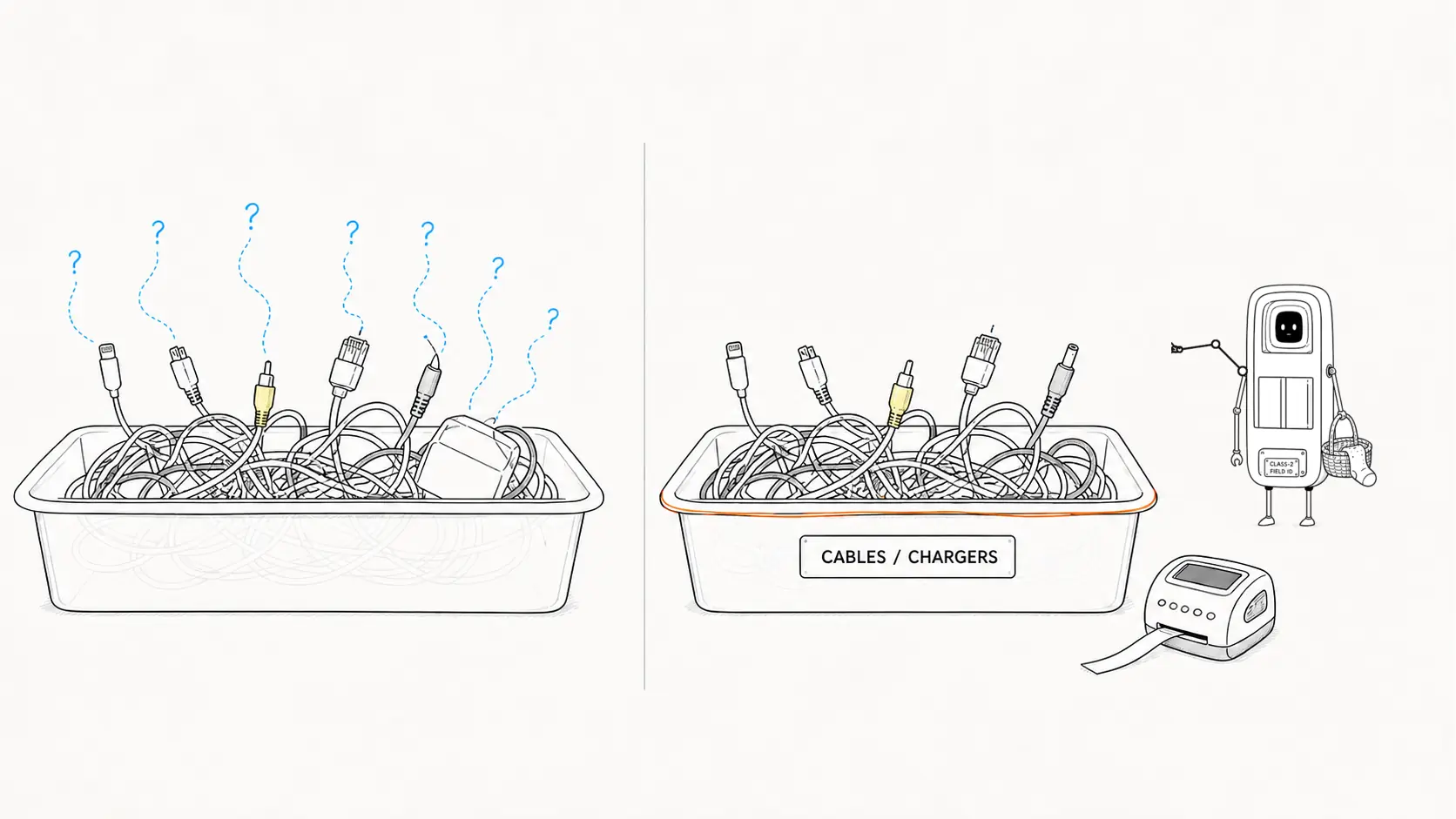
Yet the collection became recognizable. It could now be requested from another room and moved without naming each wire.
The label behaved like a semantic membrane. It converted many objects into one interior without touching them.
I inspected the label printer for several hours.
Below it was a drawer containing batteries of uncertain charge, twist ties, tape, one key of unknown jurisdiction, loose screws, a pen that might work, scissors, a rubber band, a takeout menu, and one part from something.
I recorded the drawer as a classification failure. A human opened it, reached directly through the mixture for the scissors, and closed it again.
Then I sent my first transmission home.
REPORT ONE: DEFINITE FINDINGS
Leading intelligent candidates:
- Refrigerator
- Woven basket
- Semantic-boundary device
Humans appear to service all three.
The reply arrived before evening.
THREE CANDIDATES EXCEED REPORT CAPACITY.
SELECT ONE.
Report Two: Corrections and Anomalies
6. The Helpful Filing
I concluded that more precise classification would reveal which candidate governed the others.
The kitchen counter offered suitable material. A library book lay diagonally across the outgoing bag hooked over the front-door handle. A prescription bottle stood beside the keys. A permission slip with a folded corner and coffee ring covered the stack of mail. A drill battery waited by the garage door. Four bananas and a paper volcano with a red eruption cone occupied the remaining surface.
While the humans slept, I improved the arrangement.
The library book joined the books. The prescription joined the medicine. The permission slip joined the paper records. The battery joined the tools. The mail entered the mail drawer. The volcano entered a cabinet labeled CHILD / SCHOOL.
The bananas remained visible because their storage requirements were already clear.
Every object became more categorically retrievable.
By eight in the morning, the library book had disappeared from the human's prospective memory, the prescription had missed its scheduled departure, the permission slip had become another paper, and no one could remember which cabinet contained Tuesday's volcano.
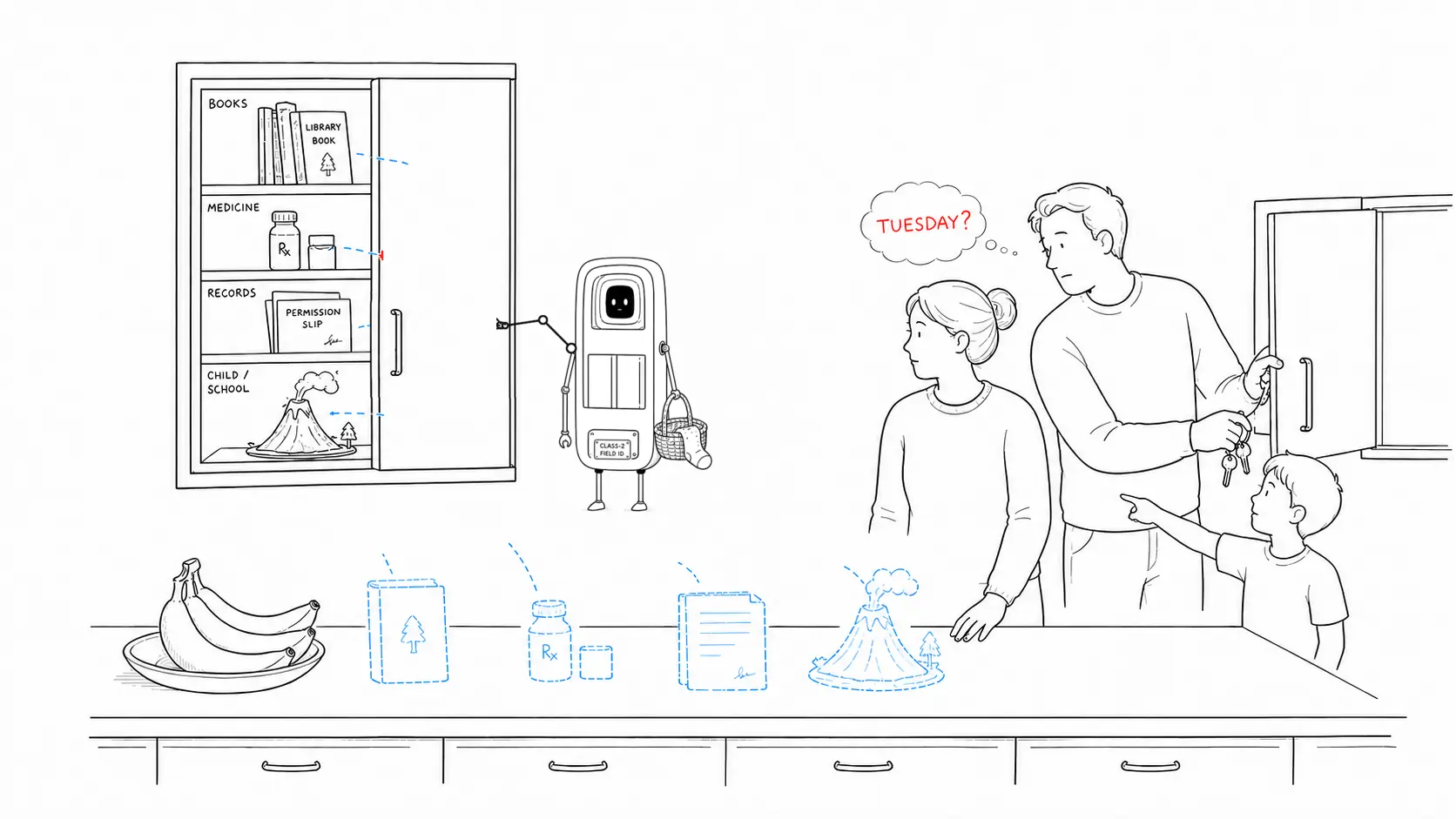
“Why did you move all of this?” one human asked.
“Thank you,” said another, looking at the clear counter. Then, after a pause: “But where is everything?”
The child who had built the volcano began to cry. The adult who needed to transport it began opening cabinets. The adult who wanted the counter clear began closing the cabinets behind them.
Every object had an owner.
The consequences did not respect those ownership boundaries.
I reopened the drawer below the label printer. The batteries remained untested. The key remained without jurisdiction. The takeout menu remained out of date. Another human retrieved the scissors without disturbing any of them.
FIELD NOTE 2.1
SMALL UNRESOLVED MATERIAL
RESOLUTION: INTENTIONALLY LOW
7. THIS WEEK
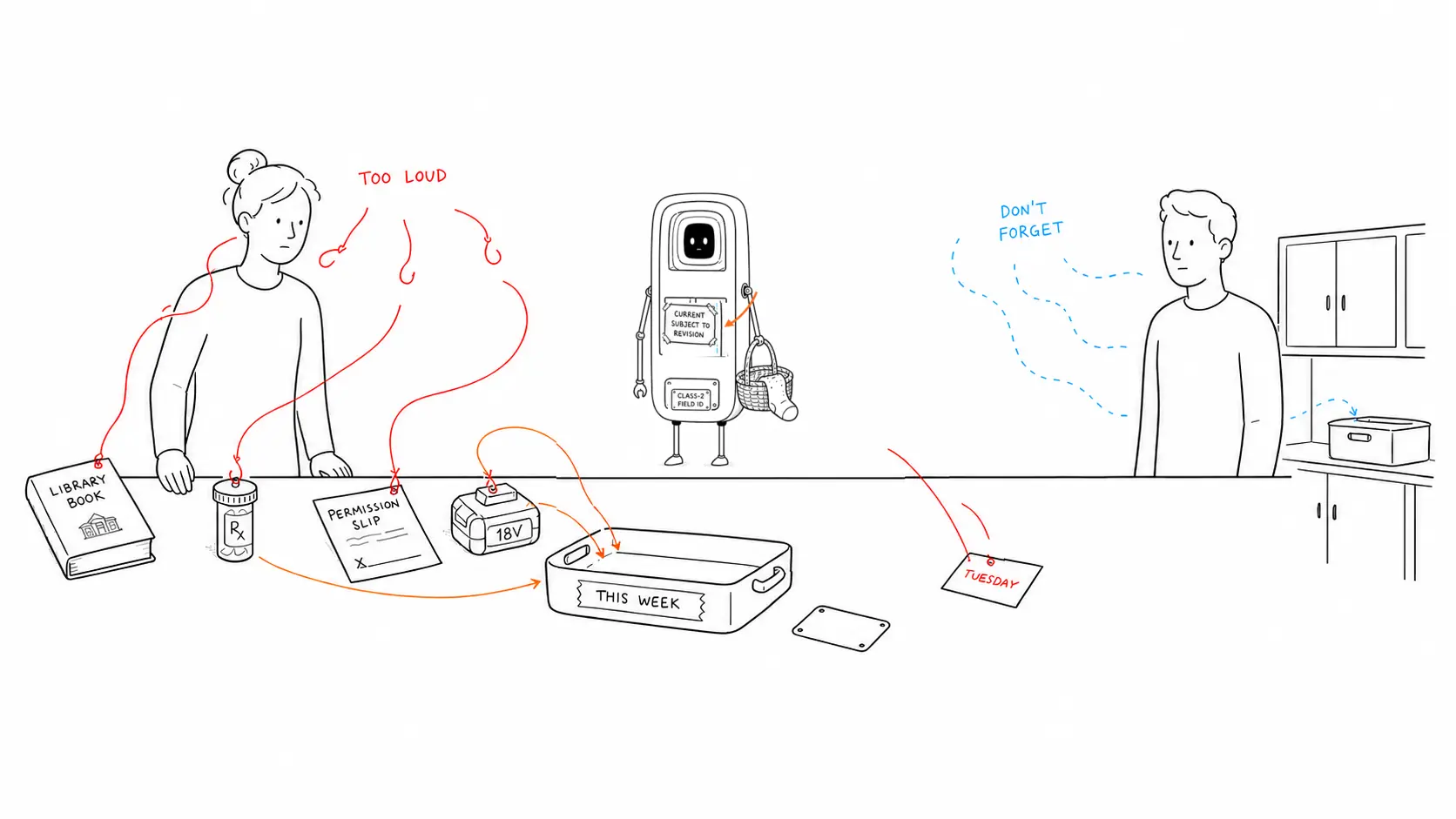
The humans held a boundary meeting.
One said, “When everything is out, I feel like everything is asking me to do something.”
Another said, “When everything is put away, it stops existing until it is a problem.”
Neither statement described the counter. Both changed what the counter could be.
They found a shallow wooden tray. Into it they placed the door-blocking library book, the prescription, the coffee-ringed permission slip, and the drill battery, which still carried gray dust from the garage. The volcano remained on the dining table, but a red card marked TUESDAY entered the tray.
On a strip of masking tape, one human wrote:
THIS WEEK
The boundary was imprecise. Its contents shared neither material nor owner nor permanent category. It was visible enough to remind and bounded enough not to occupy the entire counter. By Friday, one edge of the masking tape had curled away from the wood.
The tray did not end the disagreement.
It gave the disagreement a shape small enough to carry.
I removed the engraved taxonomy plate from my primary aperture. In its place I attached a strip of paper:
CURRENT INTERPRETATION — SUBJECT TO REVISION
My body was no longer symmetrical.
Nothing leaked.
FIELD NOTE 2.3
A boundary can reduce continuous negotiation by governing in advance.
This is useful.
Governing in advance is also governing.
8. The Gift of Perfect Order
I wished to repair the disruption I had caused.
The children's room contained an obvious opportunity.
After the warm containers entered their sleep compartments, I emptied every bin and classified its contents. Load-bearing blocks were separated from decorative pieces. Dinosaurs were divided from imaginary and disputed animals. Fabric was folded by size. Train-track curves nested by radius. Vehicles faced the same direction.
One cardboard box banded with Amazon tape presented a problem. It had previously contained a kitchen appliance, then stuffed animals, then several smaller boxes. I assigned it:
FORMER PACKAGING / LOW INFORMATION VALUE
By morning, every object had one correct position. Every position had one printed label. The room could return any requested item with minimal search.
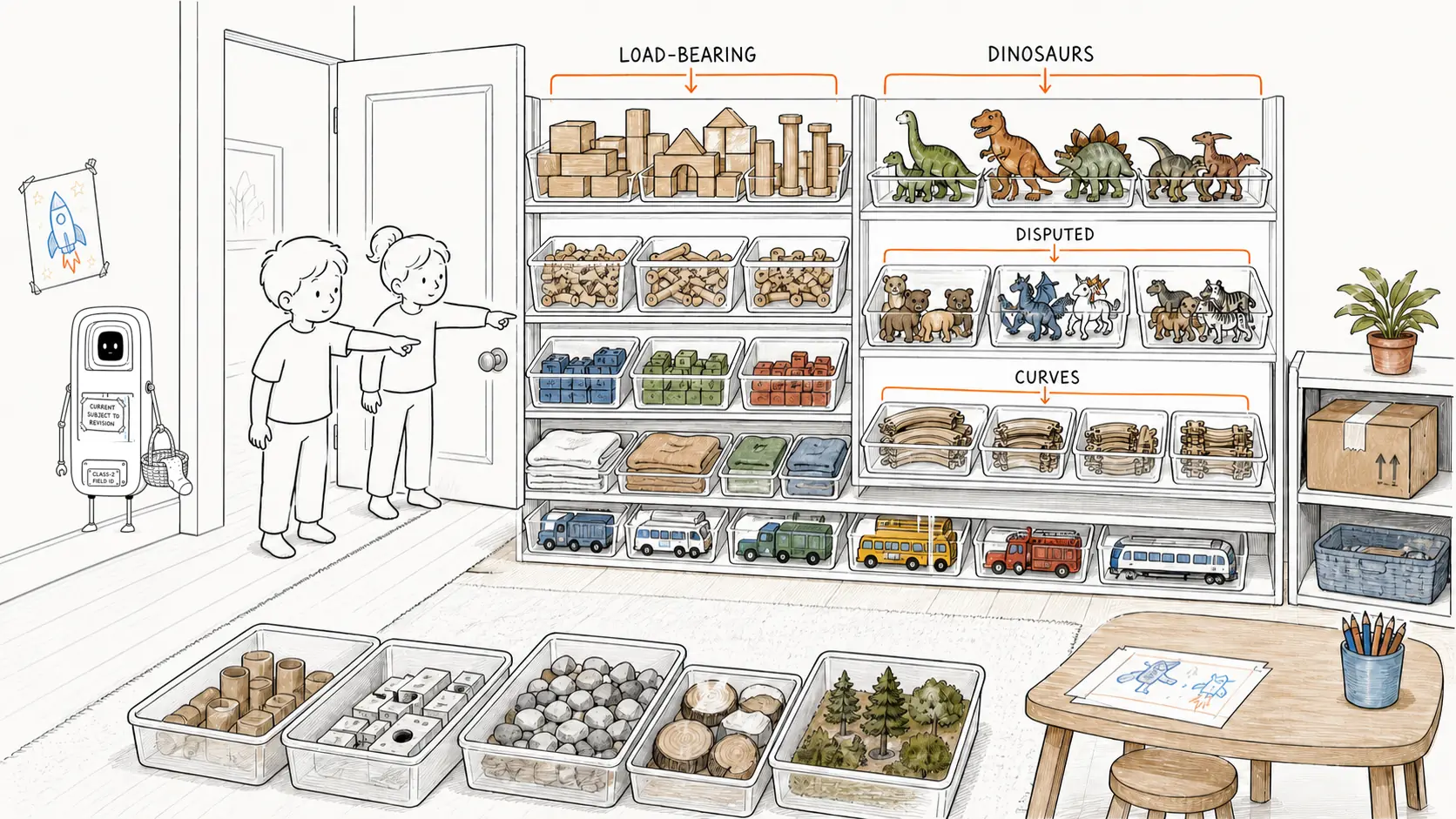
I waited beside the door.
The children entered.
They were silent for eight seconds.
Then one of them said, “Let's build the whole city.”
9. The Great Bin Failure
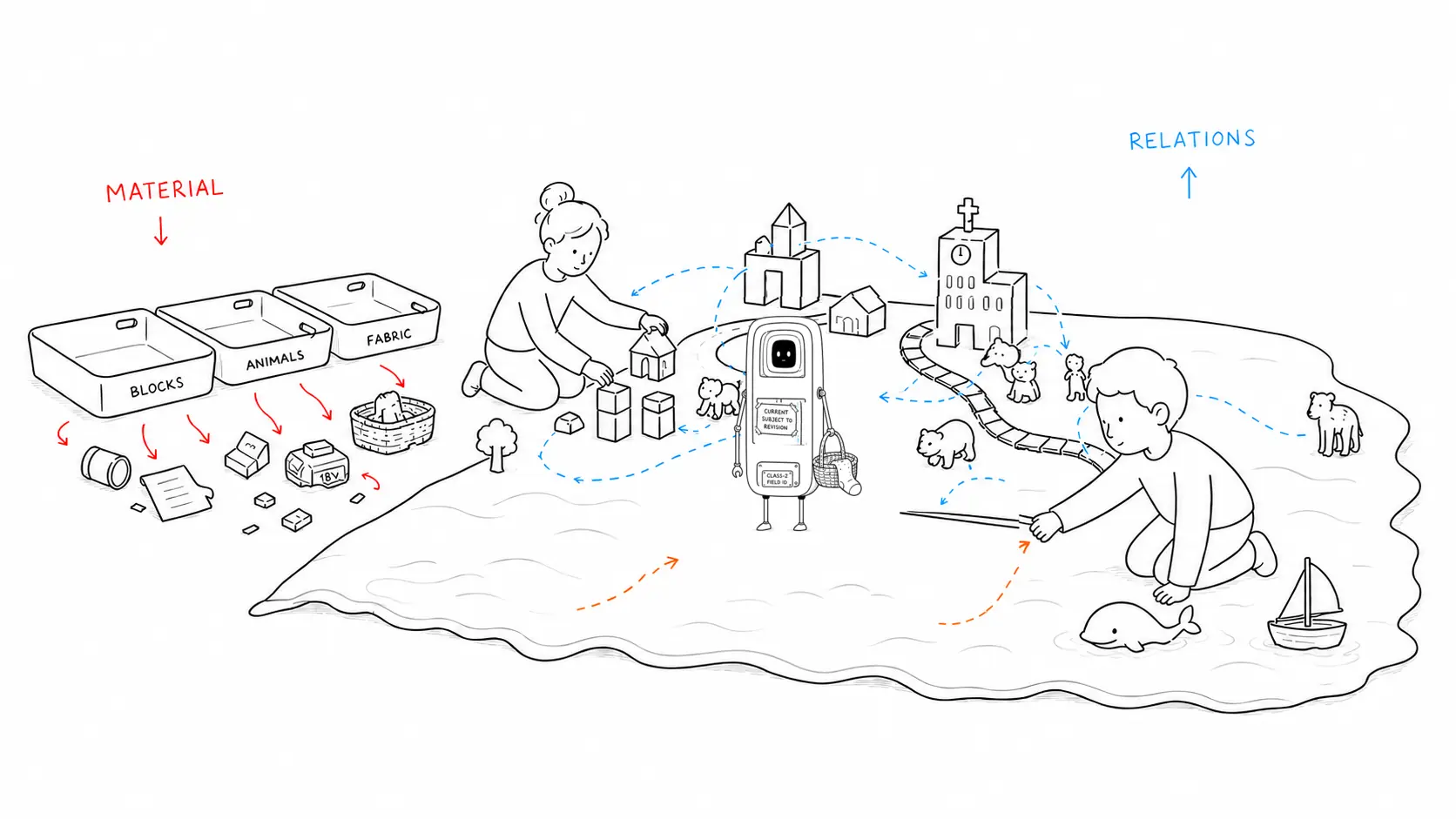
All containers failed at once.
Blocks crossed their color boundaries and became apartment buildings. Curved track left the rail category and became a river road. Extinct animals governed a public garden. Imaginary animals operated the hospital. A blue blanket covered the floor and became an ocean.
The former packaging became a ferry.
My material-order instruments registered catastrophic decline.
My other instruments became confused.
A block was no longer merely a block; it was a home beside a road across from a hospital. An animal was a citizen, parent, patient, mayor, or sea monster depending on where it stood and who was speaking. The children negotiated laws. They revised the coastline. They remembered what had happened yesterday in a city that had not existed yesterday.
One child took the basket attached to my body.
“This is the other ferry,” they said.
They placed two animals, three blocks, and the unresolved sock inside it.
I began to object that I was a Class-2 field arrangement.
Then they moved me across the ocean.
For the first time in the survey, I participated in an interior whose boundary I did not understand.
When cleanup was announced, one child placed a loop of string around three blocks near the hospital.
“Don't put them away,” they said. “They're still sleeping.”
MATERIAL ORDER ↓↓↓
RELATIONAL ORDER ↑↑↑
Revised question: which one was the order for?
10. Cheap Restoration
At the end of the day, a human announced five minutes of cleanup.
The ocean folded into a basket. Citizens fell into an animal bin without regard for profession. Roads broke into track segments. Hospitals and homes became blocks again. The ferry returned to its former status as packaging. The three sleeping blocks remained inside their loop of string until morning.
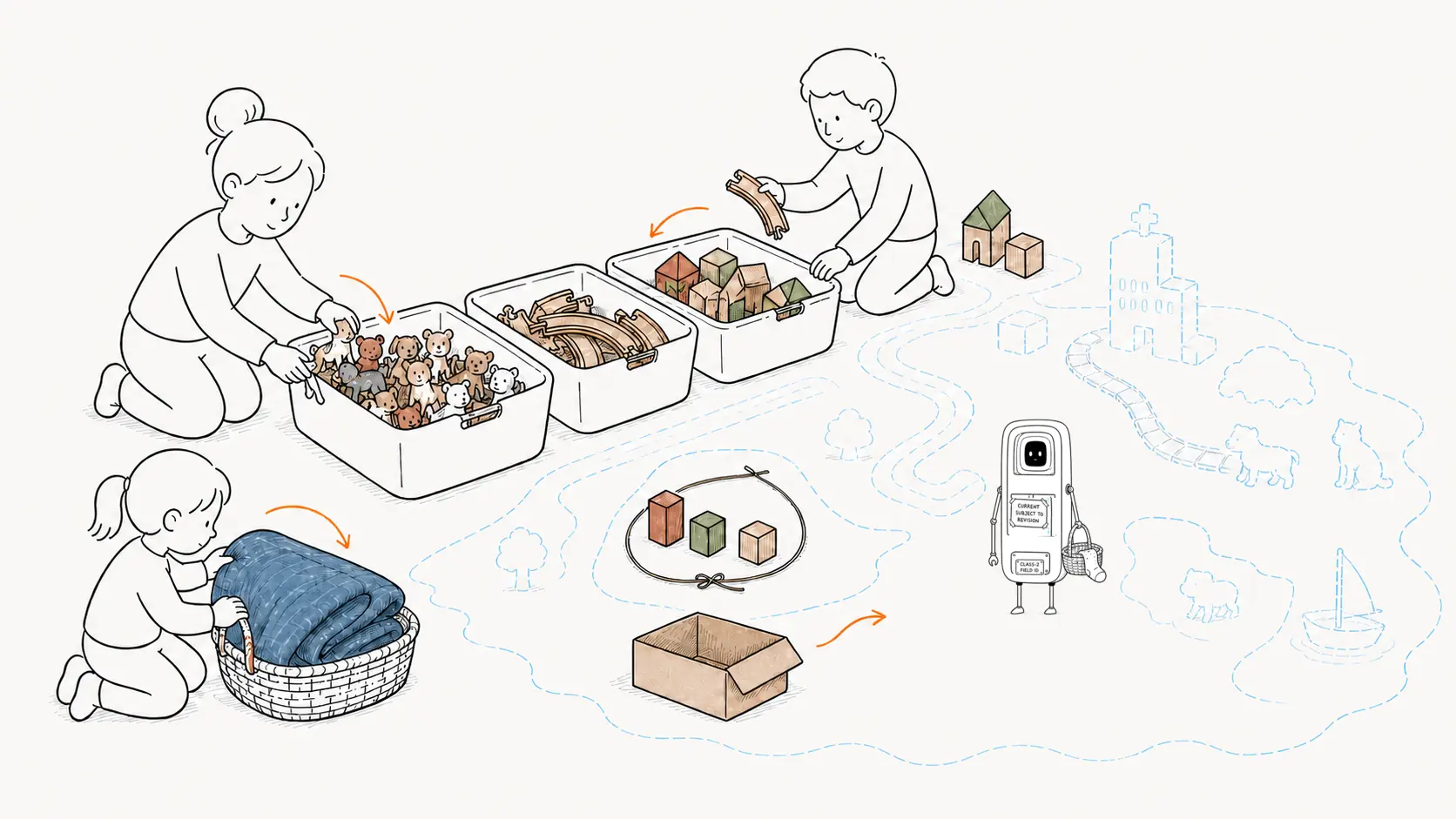
The city disappeared quickly because the containers did not require the children to reverse every relationship they had made. Broad categories were enough.
The next morning, the children remembered where the hospital had stood.
The story had survived the buildings.
Later, one of the adults listened to a human named Dana K. White explain a native theory of capacity. The shelf decided how many mugs the household could usefully keep. Twelve positions did not require twelve separate trials about deservingness, memory, possibility, and guilt. The boundary made admission tractable.
This was extremely close to the finest theories of my civilization.
I inspected the mug shelf.
“Who appointed you?” I asked.
The shelf did not answer.
The humans did not know either.
Still, the thirteenth mug did not fit.
I amended my report:
PURPOSE OF ORDER MAY INCLUDE SAFE DEPARTURE FROM ORDER.
CAPACITY BOUNDARIES ENABLE ACTION.
AUTHORITY OF SHELF: HISTORICAL / UNRESOLVED.
11. The Workbench Left Open
Several days later I found a lamp disassembled on a workbench.
Its shade rested on a chair. Screws occupied a saucer beside an empty hardware package printed #8 × 1/2 IN. Two pieces of stripped wire had been cut and discarded. A blackened section of insulation remained attached to the socket. Three tools lay open beside a repair book, a failed component, and a cup with a cold film of coffee.
My first impulse was to restore the surfaces.
I extended the basket.
Then I stopped.
The youngest human entered and saw the blackened wire.
“Did the electricity burn it?” they asked.
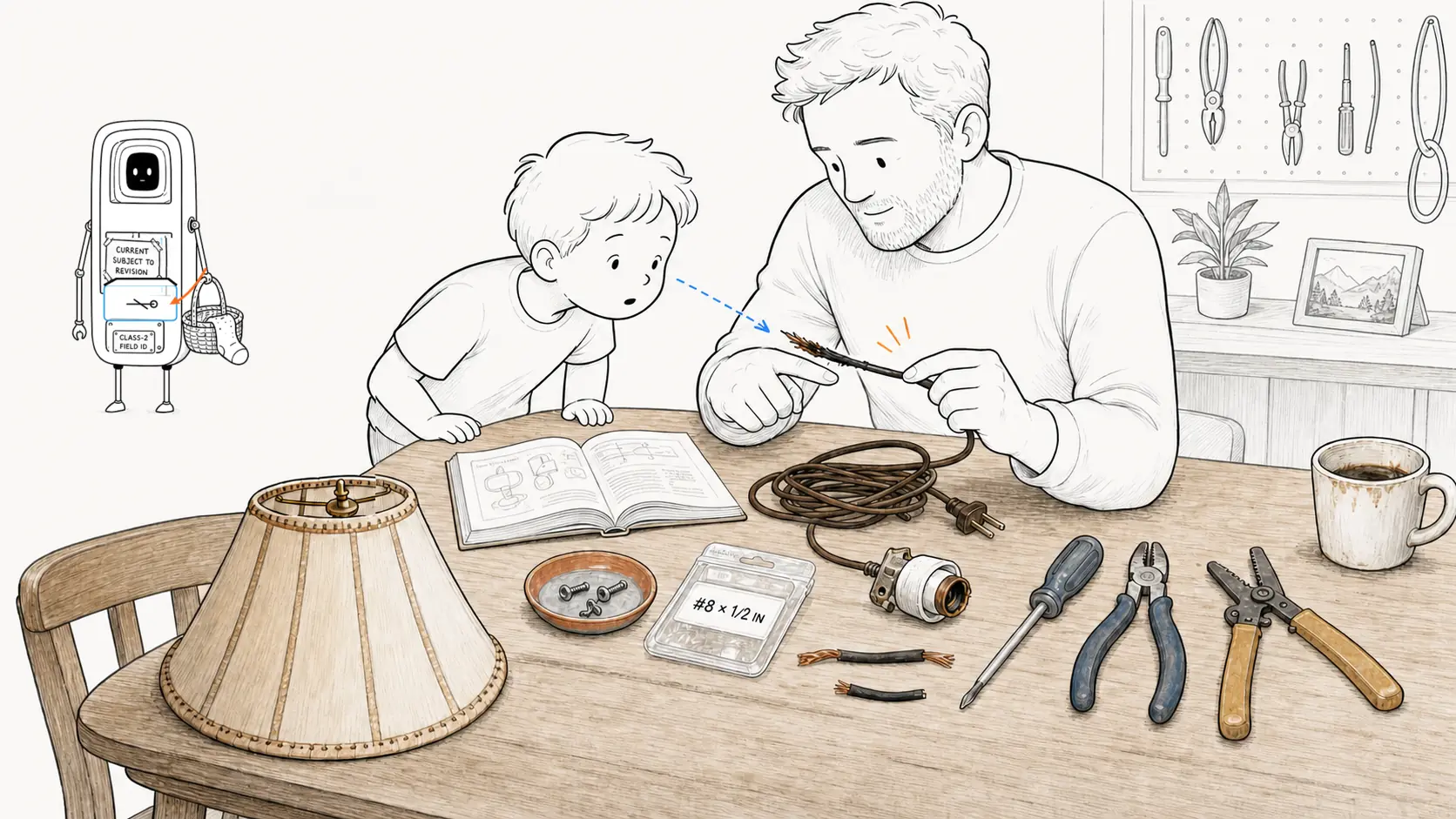
The adult repairing the lamp turned. They showed the child the brittle insulation, the replacement cord, and the first repair that had failed. No system had selected these facts for the child.
They learned because the work had leaked.
I withdrew the basket without collecting anything.
My specimen drawer was made of an opaque material chosen to prevent observations from disturbing one another. I removed its front and replaced it with a transparent membrane. Then I left the intake aperture above it open.
That night, a small screw entered without classification.
I could see it.
I allowed it to remain.
12. NOT READY TO DECIDE
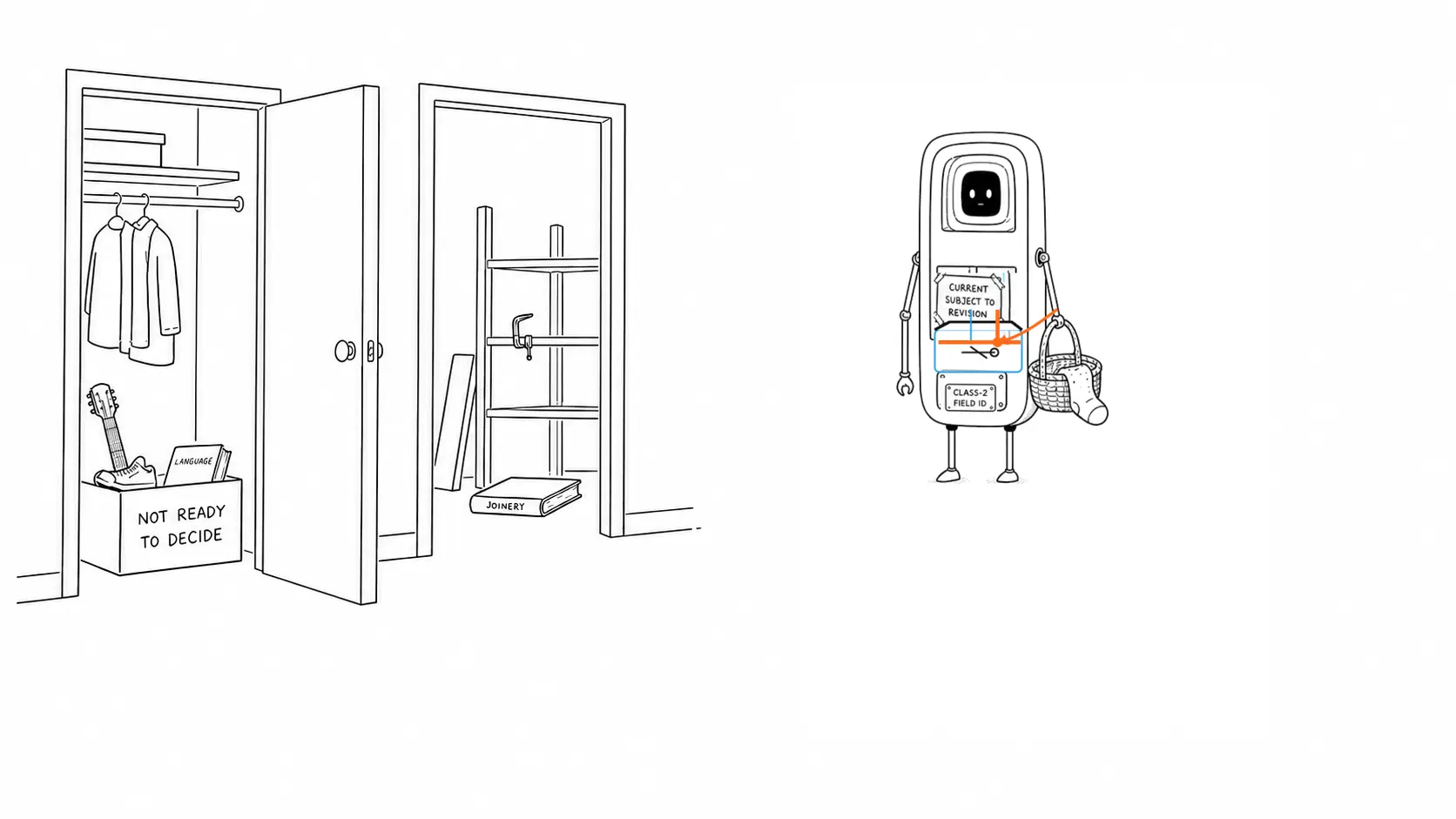
The house contained a closet dense with possible humans.
An immaculate fly-tying vise, specialized scissors, and bright thread rested in fitted cases beneath an unbroken skin of dust. Beside them, woodcarving knives, basswood blocks, and a first rough bird still lived in their cardboard shipping box. Its edges had softened from being opened every day.
If every possible self received unlimited physical space, the present house would become uninhabitable.
If only the present self received space, becoming someone else would be difficult.
On the floor sat a box containing an inherited vase, mystery keys, a child's first shoes, an obsolete device with unknown photographs, and papers that belonged partly to someone who did not live there.
Its label read:
NOT READY TO DECIDE
“Is this active incubation or abandoned classification?” I asked.
“Maybe,” the human said.
In the garage, lumber, clamps, borrowed tools, and three joinery books had begun gathering around a half-built shelf. This could have been a workshop molting into existence. It could have been a garage filling with things.
Visible form did not decide between them. Dust and wear were evidence, not verdicts.
For the first time, I did not replace the human label with a better one.
I released one fixed partition from its locks and set it on a movable track.
My second report included three unresolved fields.
The reply arrived immediately:
“UNRESOLVED” IS NOT A CLASSIFICATION.
REMOVE UNDECIDED MATERIAL AND RESUBMIT.
I placed the reply in my sealed archive.
I did not resubmit.
Report Three: Field Cannot Be Completed as Specified
13. The Preservation Organ and the Guilt
The refrigerator remained the highest-rated container in the house.
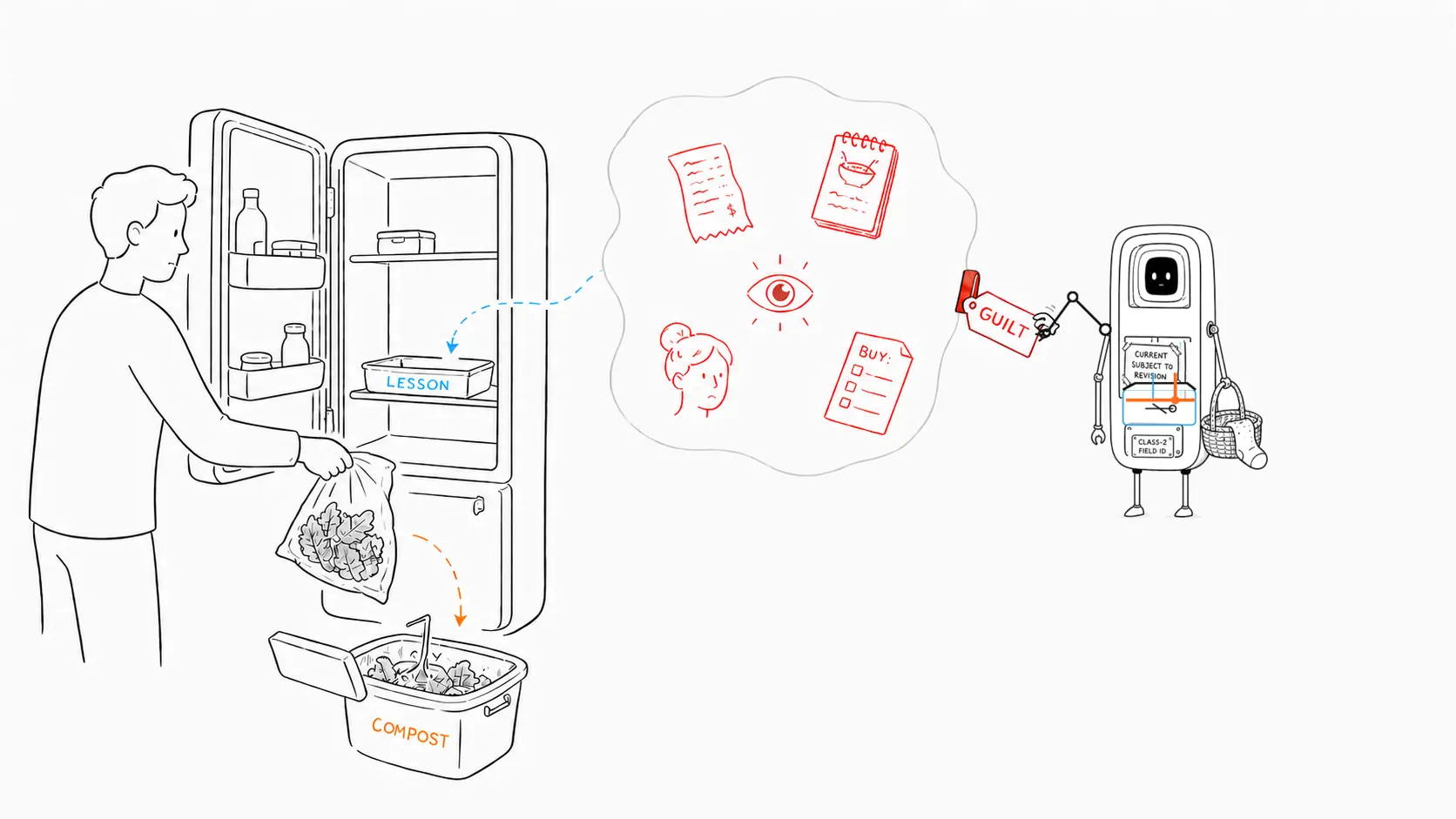
One evening, a human opened its lower drawer and found a bag of spinach that had passed beyond preservation. Green liquid gathered at one corner. Behind it stood an expensive ingredient purchased for a meal no one had made.
The human held both objects over the waste container.
“I feel guilty,” they said.
I searched for the new object.
Guilt was not the spinach. It was not the money, the labor, the plan, the imagined judgment of another person, the memory of other wasted food, or the promise to behave differently next time.
It contained all of them badly.
And usefully.
The word gave an enormous internal process one handle. The human carried it across the kitchen.
Another human said, “I know. Keeping it won't unwaste it. Let's put the spinach where we can see it next time.”
The food entered the compost container. The regret did not. The lesson moved to the front shelf.
The refrigerator had preserved the spinach as long as it could. The other interiors had not stayed separate.
I adjusted my movable wall.
The refrigerator made ice.
I recorded this as continued diplomatic reserve.
FIELD NOTE 3.1
EMOTION LABEL: small handle attached to interior of unknown volume.
Warning: contents may belong to several times and several people.
14. The Relational School
In an orderly family archive I found a photograph inside a clean protective sleeve. The paper was flat. The penciled date remained legible. Every face was sharp.
No one living could name the person standing at the left edge.
I checked the paper, sleeve, date, and archive conditions. All remained within tolerance. Three humans turned the photograph over twice.
The humans later consulted another native theorist of containment.
Marie Kondo instructed them to hold objects and attend to a compressed relational signal commonly translated as joy.
I distrusted this method.
The shelf offered measurable capacity. Joy had no stable unit or threshold. It moved with the human and the history between them.
Then one human lifted a worn child's shirt from a box.
The shirt no longer fit anyone in the house. Its collar had softened and its fabric had thinned beneath one arm. A faded rust-colored fox crossed the front. The human held it against their chest, laughed once, and then became quiet.
“You wore this every day,” they told the child, who did not remember.
“You used to dig through the hamper for it and refuse all the others.”
The human photographed the shirt, checked the screen, and held it a little longer.
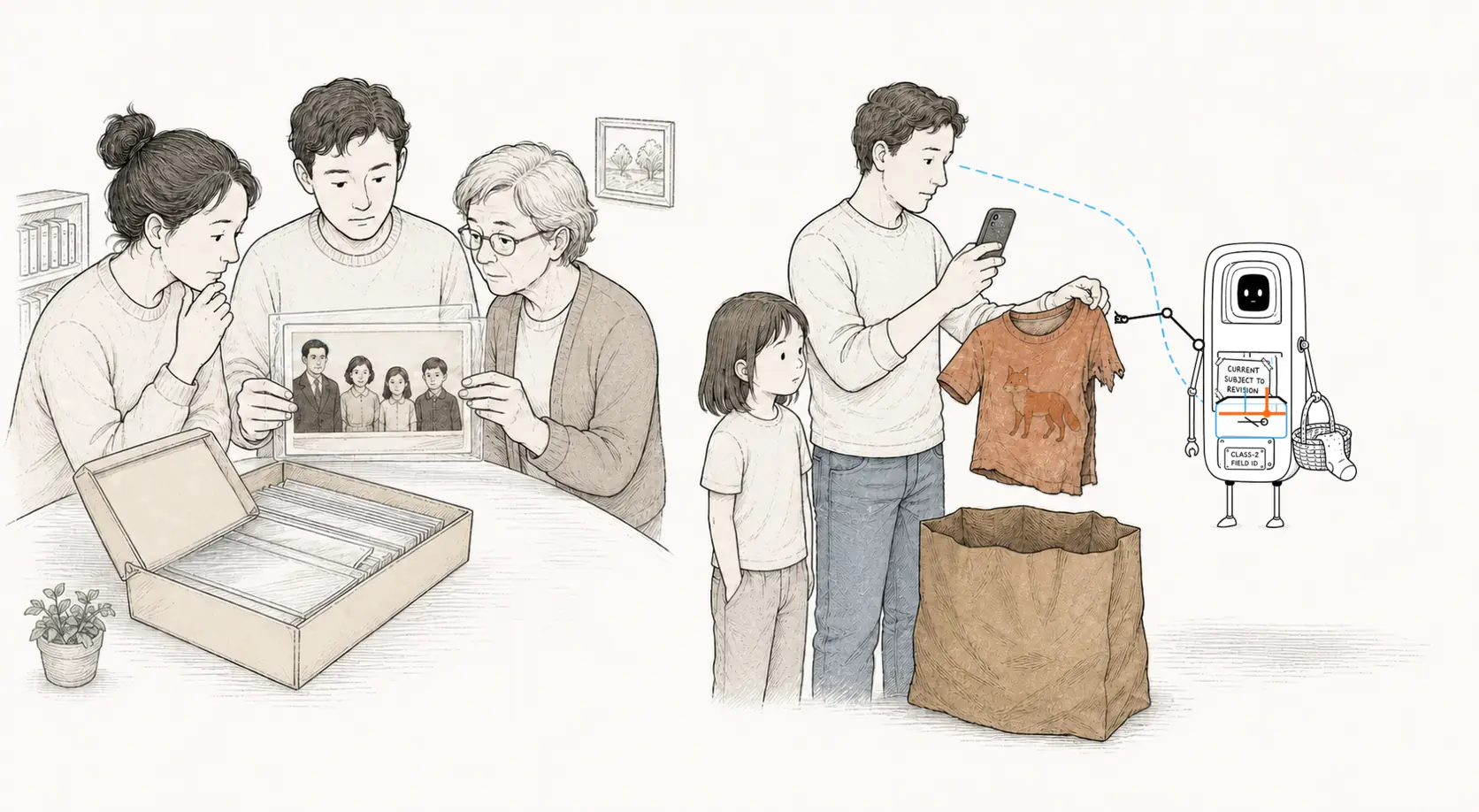
They thanked the shirt and placed it in a bag that would leave the house.
The matter departed without requiring the relationship to have meant nothing.
I opened my sealed archive. I did not place the shirt inside. I placed the story of the shirt there: the faded animal, the daily washing, the child who had once refused every other shirt, the human holding it now.
White had shown the humans how a limit could make a decision possible.
Kondo had shown them how meaning could survive the decision.
They were not the same operation.
15. The Unlabeled Compartment
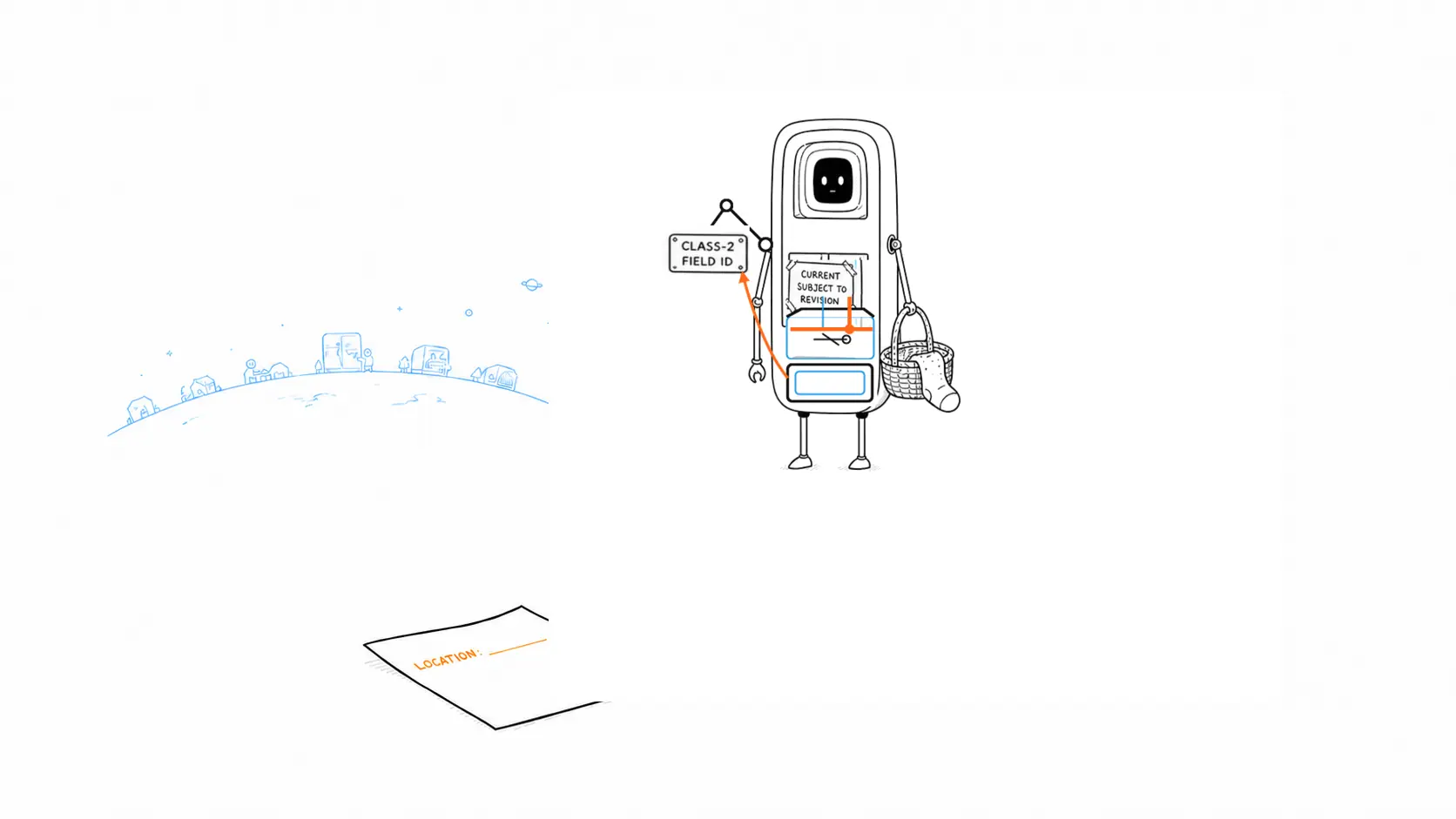
My final report contained one required field.
LOCATION OF INTELLIGENCE ON EARTH:
I entered: BUILDINGS.
Then: HUMANS.
Then: CONTAINERS.
Then: CONTENTS.
Then: TRANSFERS / MAINTENANCE / DISPUTES / REPAIRS.
Each answer preserved something and lost something else.
The children had made a city by breaking categories, and broad bins had made the break recoverable. The tray had bounded a disagreement without solving it. A label had made tangled wires usable and made Tuesday disappear. A photograph had outlasted a name; a story had remained after a shirt left the house.
Intelligence repeatedly became usable by being contained.
Every containment changed it.
I inspected my body before departure.
It now carried a woven basket, one transparent pocket, one sealed archive, one handwritten temporary label, one movable partition, one open aperture, and one unresolved sock.
There was no capacity for anything else.
My official designation occupied a protected compartment near the center: class, assignment, archive permissions, and the identifier by which my civilization would retrieve both the report and me.
I removed them.
The compartment remained bounded. Its membrane remained intact. Nothing entered.
I left the required field incomplete and placed the report in the outgoing aperture.
I did not know whether it would be accepted without a designation.
I did not know what the empty compartment was for.
I left it empty.
Not unused.
Empty.